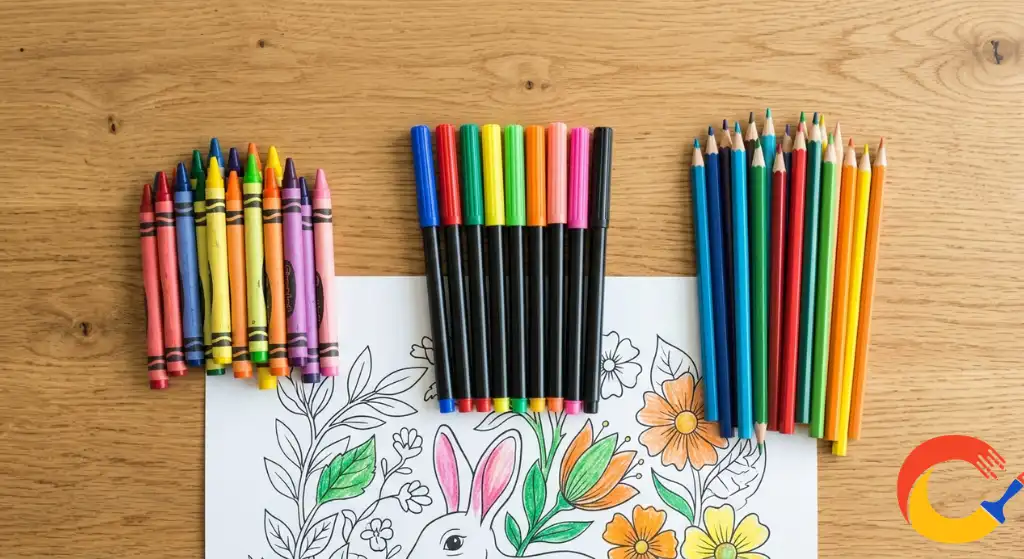
Somewhere around 2015, bookstores started doing something strange. They began putting coloring books, the kind with intricate floral patterns and detailed animal designs, right next to the bestsellers at the front of the store. Adults were buying them in genuinely surprising numbers, not as gifts for kids, but for themselves. A few publishers and a handful of psychologists got curious about why, and what they found out turned out to be more interesting than “it’s relaxing,” even though that’s the explanation most people reach for first.
Browse By Theme
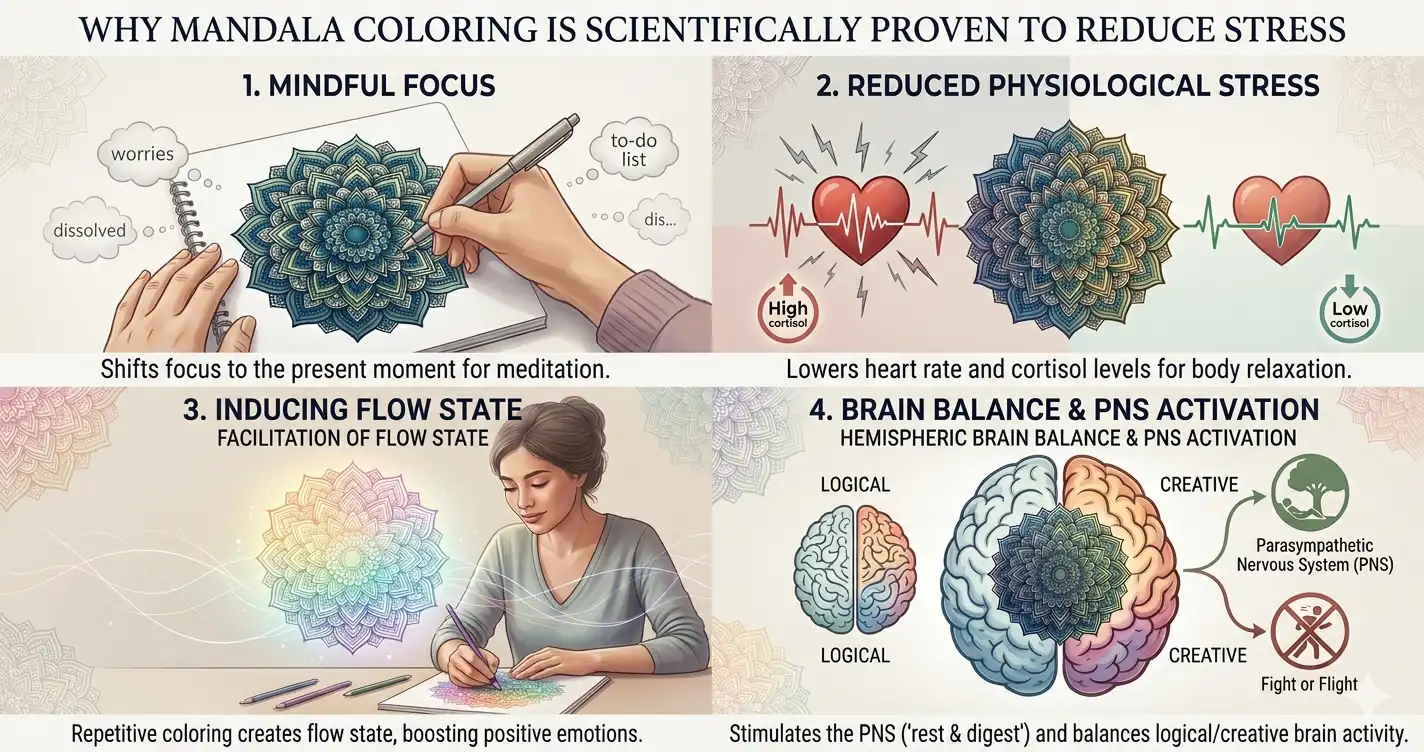
The relaxation angle is real, and it’s been written about plenty, including in our own piece on why mandala coloring reduces stress. But that’s only part of the story. There’s a deeper set of psychological reasons adults got hooked on an activity most of us hadn’t touched since elementary school, and understanding them explains a lot more than just why it feels nice.
It’s One of the Last Socially Acceptable Forms of Play for Adults
Adulthood quietly eliminates most of the activities that used to count as “play.” Building blocks, finger painting, doodling in the margins of a notebook, these get phased out somewhere around middle school and rarely come back, replaced by hobbies that need to justify themselves as productive, skill-building, or at least Instagram-worthy.
Coloring slipped back into adult life partly because it doesn’t ask to be justified the same way. Nobody expects you to get “good” at it or turn it into a side income. There’s no pressure to improve, no audience, no real stakes. Psychologists who study play in adulthood have pointed out that this kind of pressure-free, outcome-irrelevant activity is rare once we’re grown, and its rarity might be exactly why it feels so good when we find it again. It scratches an itch most adult hobbies don’t even attempt to reach.
Nostalgia Is Doing More Work Than People Realize
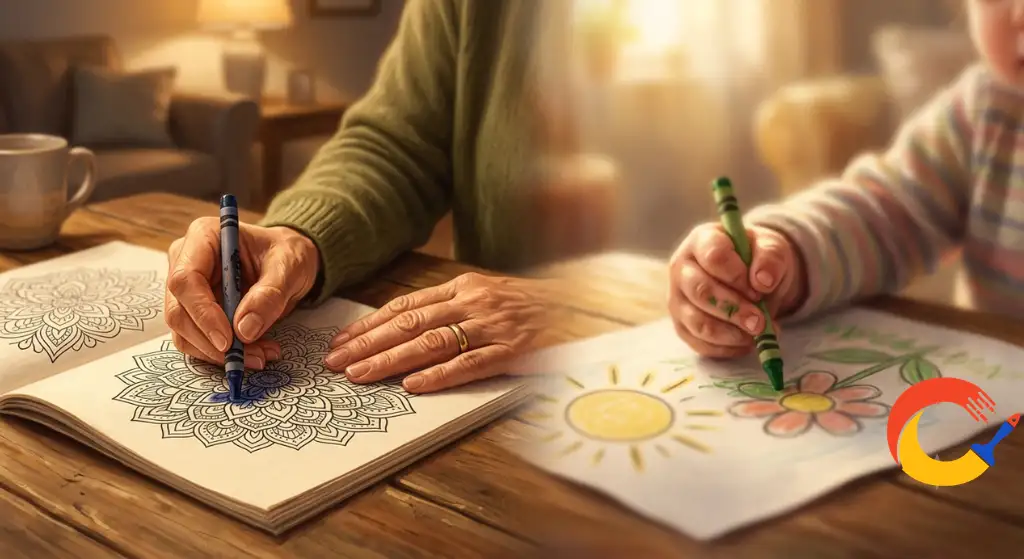
There’s a specific kind of comfort that comes from doing something you associate with being a kid, especially a kid who didn’t yet have a mortgage, a job, or three group texts demanding a response. Coloring taps directly into that. The physical motion, the smell of crayons or markers, even the format of an outline waiting to be filled in, all of it pulls on memories from a simpler stretch of life, even for people who weren’t particularly nostalgic before they sat down with a coloring book.
This isn’t pure sentimentality either. Nostalgia has a measurable effect on mood. Dr. Constantine Sedikides, a professor of social and personality psychology at the University of Southampton and one of the leading researchers on nostalgia, has spent years documenting how nostalgic experiences consistently increase feelings of social connectedness, self-continuity, and meaning, while reducing loneliness and anxiety, even when the activity itself is done alone. His work, published in journals including Personality and Social Psychology Bulletin, helped move nostalgia from being seen as a vaguely sad emotion to being recognized as a genuinely restorative one.
Coloring taps into that in a quiet, unassuming way. The activity itself, the physical motion, the feel of a crayon or pencil, the format of an outline waiting to be filled, pulls on stored memories from childhood before any of the self-consciousness or self-criticism that comes with adulthood had a chance to attach itself to creative activities.
It Offers Creativity Without the Fear of Failure
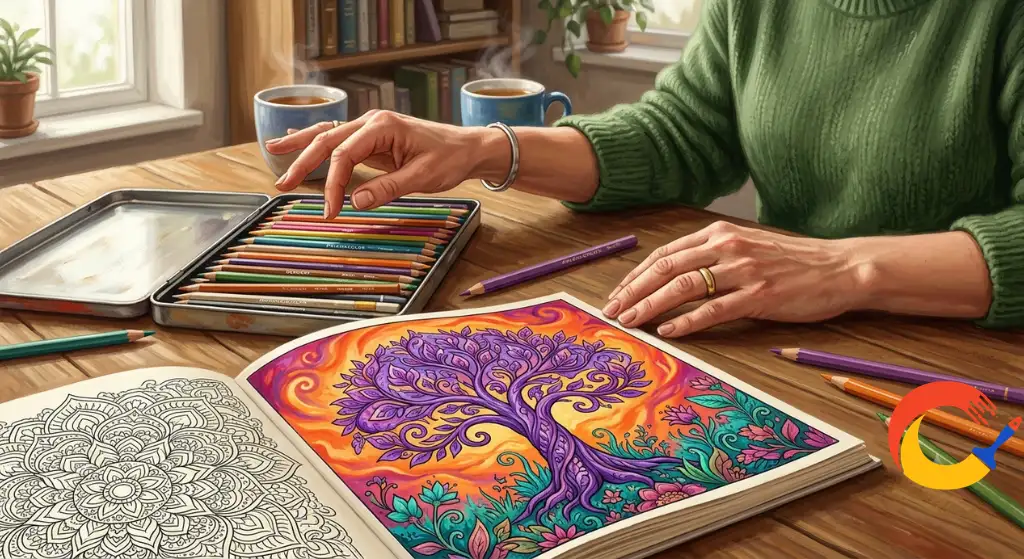
A lot of adults who would never describe themselves as “creative” still color regularly, and the reason usually comes down to one thing: there’s no way to fail at it. A blank canvas is intimidating because every choice is yours to make and every mistake is fully exposed. A coloring page removes that pressure almost entirely. The shapes already exist. Your only decisions are color and technique, both of which are inherently subjective, which means there’s no real way to get it “wrong.”
This matters more than it sounds like it should, particularly for adults who associate creative activities with judgment, whether from an old art class, a critical family member, or just their own inner perfectionist. Coloring offers a side door into creative expression that doesn’t require believing you’re talented, just willing to pick up a pencil and make some choices. For people who genuinely want a creative outlet but have been scared off by the vulnerability that comes with a blank page, that’s a meaningful difference, not a small one.
The Detail Itself Is Part of the Appeal
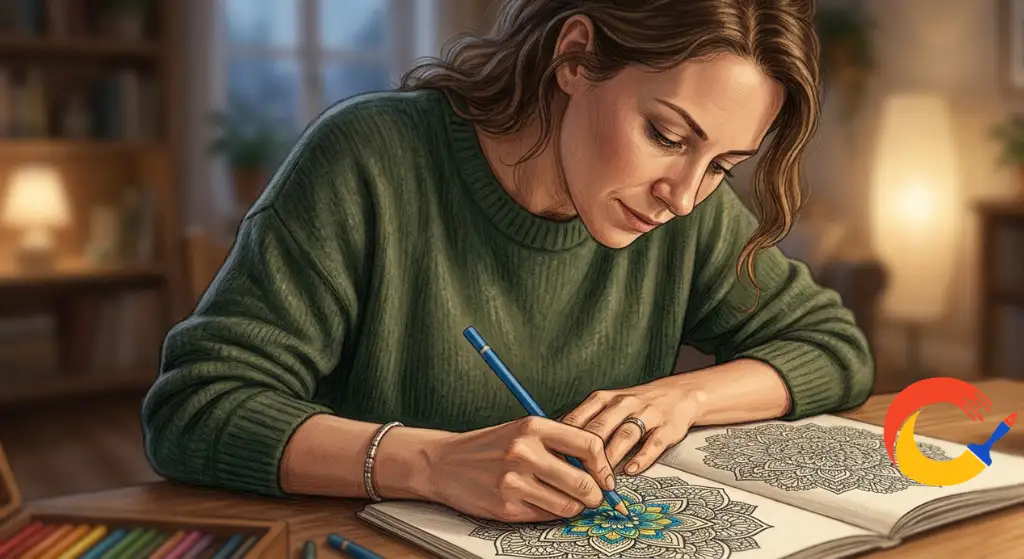
This is where intricate designs specifically come into play, and it’s worth separating from the general “coloring is relaxing” conversation. A simple page can be calming, but a genuinely detailed one, something like our intricate mandala designs, offers something extra: a sense of absorption that comes specifically from complexity, not just repetition.
There’s a reason adult coloring books leaned so heavily into intricate patterns rather than the simple shapes found in kids’ books. Complexity gives the activity enough texture to hold adult attention for longer stretches. A five-minute simple page doesn’t offer much room to disappear into, while a half-hour spent working through dozens of small interlocking sections genuinely produces the kind of immersive focus that makes time feel like it’s moving differently.
Psychologist Mihaly Csikszentmihalyi, whose decades of research at the University of Chicago established the modern scientific framework for what he called “flow,” described this state as complete absorption in a moderately challenging task where the skill level of the person matches the difficulty of the activity. Coloring, particularly intricate coloring, hits that balance almost accidentally: it’s complex enough to require real attention but approachable enough that almost no one feels out of their depth. That’s a rare combination for any activity, and it’s part of why detailed coloring is one of the most accessible routes into a flow state for people who have never experienced it deliberately before.
It’s a Quiet Rebellion Against Constant Productivity
There’s a cultural undercurrent here worth naming directly. A lot of adult life, especially in the last decade, has been shaped by an expectation that downtime should be optimized, that even relaxation needs to produce something, a skill, a side hustle, a personal brand. Coloring resists that completely. It produces nothing of real value beyond the page itself, and for a lot of people, that uselessness is the entire point.
Sitting down with a coloring page is one of the few remaining activities that doesn’t ask anything of you afterward. No one asks what you’re building toward, no algorithm rewards you for doing it more, there’s no metric attached at all. For adults exhausted by a culture that treats every spare hour as an opportunity for self-improvement, that absence of purpose can feel like relief in itself.
Why It Spread So Fast Among Adults Specifically
Part of what made adult coloring catch on as quickly as it did wasn’t just the activity itself, but the fact that so many adults were quietly looking for an excuse to do something low-pressure and screen-free without it seeming childish or unproductive. Coloring books gave that permission in a socially acceptable package, something you could mention to a coworker or post about without the slight embarrassment that might come with admitting you just wanted to color shapes for an hour.
Research published around the time adult coloring books peaked in popularity added scientific weight to what millions of people were already experiencing. A 2005 study published in the journal Art Therapy by researchers at Florida State University found that adults who colored mandala patterns reported significantly greater reductions in anxiety compared to those who colored freely on blank paper, or who didn’t color at all. That specific finding, that structured patterns worked better than open-ended coloring, helped explain something people had already intuitively discovered: it wasn’t just the act of coloring that felt good, it was the particular combination of focus and guidance that intricate, pre-drawn designs provided.
The research gave adult coloring a kind of scientific cover that made it easier for skeptical people to try it without feeling silly. Once they actually sat down and did it, most didn’t need the research to keep going. The experience itself was usually enough.
Frequently Asked Questions
Is it normal for adults to enjoy coloring? Completely. Adult coloring has been recognized by psychologists as a legitimate, beneficial leisure activity since at least the mid-2010s, when it emerged as one of the fastest-growing hobby categories in the US. The psychological reasons behind it, nostalgia, the need for pressure-free play, access to a flow state, are well-documented and entirely healthy. There’s nothing childish about it in any meaningful sense.
Does coloring actually reduce anxiety, or is that just marketing? The anxiety-reduction effect is backed by real research, not just wellness brand claims. The most cited study, published in the peer-reviewed journal Art Therapy in 2005, found measurable reductions in anxiety specifically from coloring structured patterns like mandalas. That finding has been replicated and expanded on in subsequent research. It’s not a cure for clinical anxiety, but as a short-term mood regulation tool, the evidence is solid.
Do you need to be creative or artistic to enjoy adult coloring? No, and this is one of the most important things to understand about why adults specifically gravitate toward it. The entire appeal of a pre-drawn coloring page is that the creative “hard part,” composition and design, is already done. You’re only making color choices, which are entirely subjective and have no wrong answer. People who describe themselves as “not creative at all” consistently report enjoying adult coloring precisely because it removes the part of creative activities that usually feels intimidating.
What’s the difference between coloring for relaxation versus coloring for focus? These two modes tend to correspond to different types of pages. Simpler, open designs with fewer sections tend toward relaxation, where the mind can wander somewhat while the hands stay occupied. Intricate, detailed pages like our intricate mandala collection tend toward focused absorption, closer to what Csikszentmihalyi would describe as a flow state. Neither is better. They’re just different experiences suited to different moods and different moments in a day.
What This Means If You’re Just Getting Into It
If you’re newer to adult coloring and wondering whether you’re “doing it right,” the honest answer based on everything above is that there isn’t a wrong way to approach it. Some adults want the meditative focus of an intricate, detailed design and will spend an hour on a single small section. Others want something simpler, more like the easy decompression of a basic page after a long day. Both are valid uses of the same basic activity, and the psychology behind why it works supports either approach equally.
If you’re drawn to the immersive, detail-heavy side of this, our full adults coloring collection leans into exactly that kind of complexity. If you’re more interested in the broader research on why repetitive, structured coloring patterns specifically affect stress and mood, the American Psychological Association has published accessible overviews of mindfulness-based activities that cover some of the same psychological territory from a more clinical angle, if you want to go deeper into the science behind what you’re already experiencing firsthand.