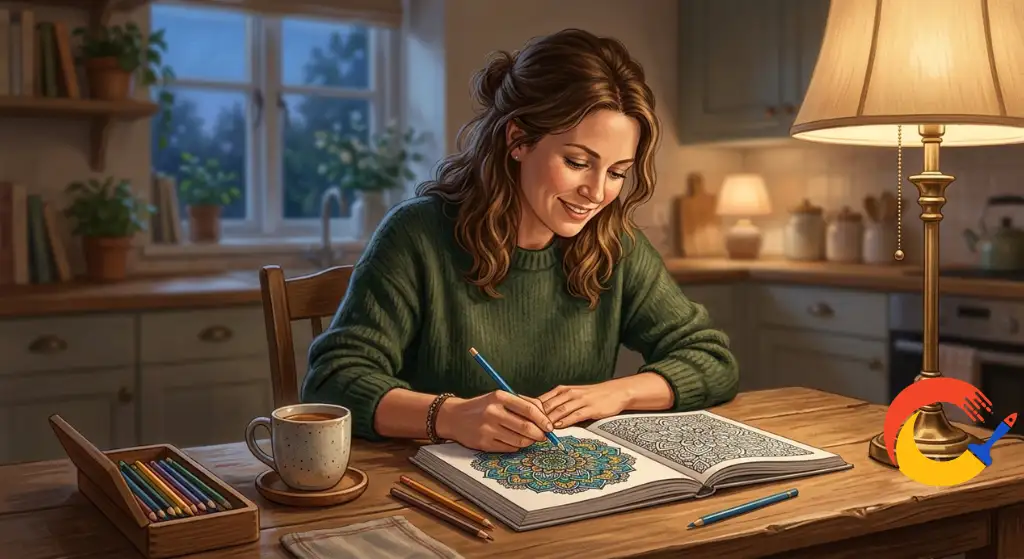
If you have ever sat down with a mandala coloring page and noticed that an hour disappeared without you checking your phone once, you already know something that researchers have spent the last decade trying to prove: mandala coloring genuinely calms the mind. This is not just a wellness trend or a marketing claim on a coloring book cover. It is backed by real psychological research, and understanding why it works can help you get even more out of every page you color.
Browse By Theme


What Makes a Mandala Different from Regular Coloring
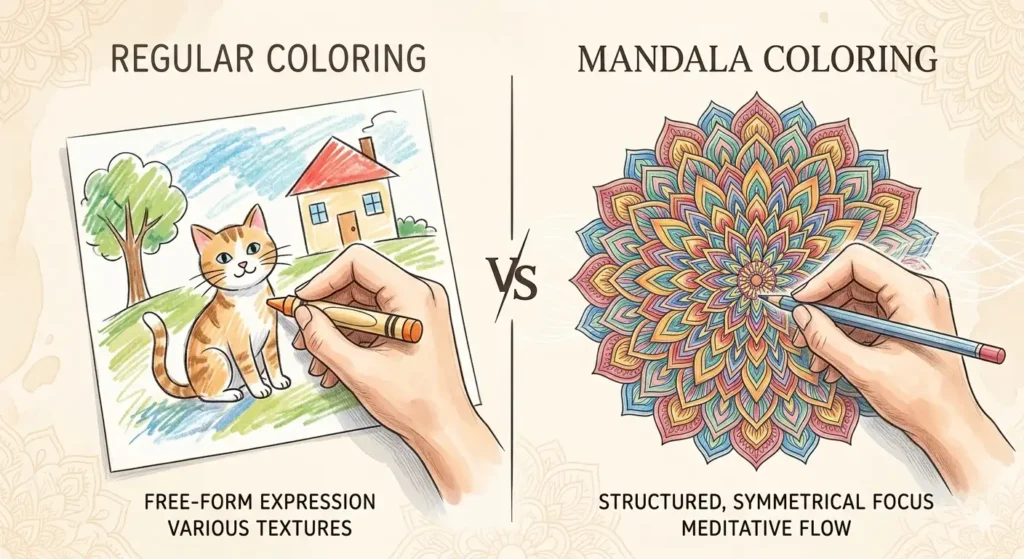
The word “mandala” comes from Sanskrit and means “circle.” For thousands of years, mandalas have been used in Hindu and Buddhist traditions as tools for meditation and reflection. The repeating, symmetrical patterns radiating out from a central point are not random. That symmetry is exactly what makes mandalas so effective for calming the nervous system.
When you color a mandala, your brain naturally falls into a rhythm. You move from the center outward, repeating similar shapes and patterns in a predictable sequence. This repetition is key. Unlike coloring a complex scene with many different unrelated elements, a mandala gives your brain a structured, low-stakes pattern to follow, which makes it much easier to enter a state of calm focus.
The Research Behind the Calm
In 2005, a study published in the journal Art Therapy found that adults who colored mandalas experienced a significantly greater reduction in anxiety than those who colored on plain paper or did not color at all. The structured, repetitive nature of the mandala pattern appeared to be the key factor, more so than coloring in general.
Later research has supported this finding. Psychologists studying “flow states,” the mental zone where you become fully absorbed in an activity and lose track of time, have noted that mandala coloring is one of the easiest ways for beginners to experience flow. You do not need artistic talent or training. You simply need a pattern, a few colors, and a few quiet minutes.
This matters because flow states are strongly linked to lower cortisol levels, the hormone most responsible for the physical feeling of stress. Activities that reliably trigger flow, like mandala coloring, can produce measurable relaxation benefits similar to short meditation sessions.
Why Mandalas Work Better Than Random Doodling
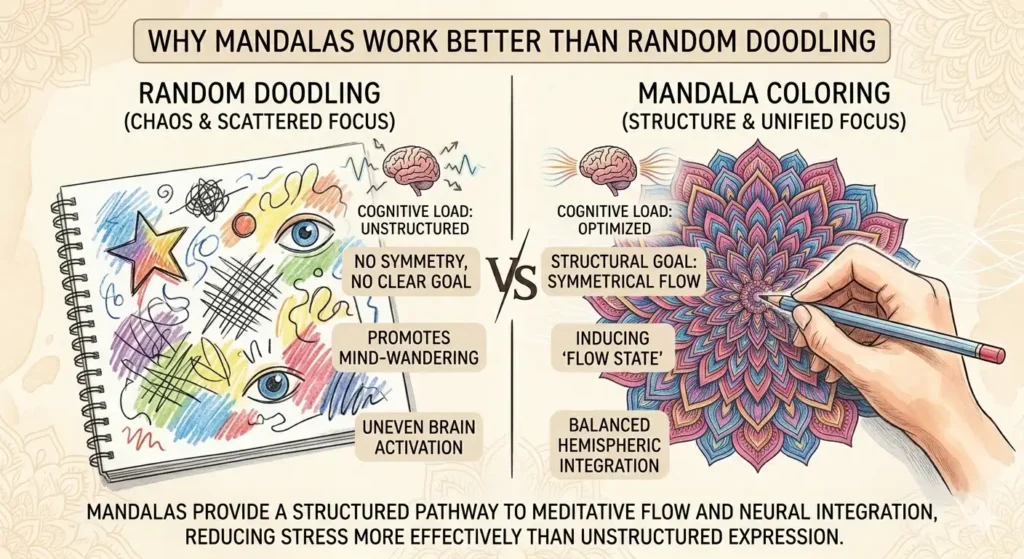
It might seem like any quiet, repetitive activity should have a similar calming effect, but mandalas have a specific advantage: built-in structure without complexity. A blank page can actually increase anxiety for some people because of the pressure to create something “good.” A mandala removes that pressure entirely. The shapes are already there. Your only decision is color, which is a much smaller and less intimidating choice than composition or design.
This is also why mandala coloring works so well for people who feel resistant to traditional meditation. Sitting still with your thoughts can be difficult, especially for beginners. Coloring a mandala gives your hands something to do and your eyes something to follow, which makes the meditative state feel accessible rather than forced.
Choosing the Right Mandala for Your Mood
Not all mandalas serve the same purpose, and matching the pattern to how you are feeling can make a real difference.
If you are feeling overwhelmed or anxious and need something simple to ease into, start with a simple mandala coloring page. These designs use fewer sections and larger spaces, which means less decision-making and a gentler entry point into the activity.
If you already feel calm and want a longer, more immersive session, an intricate mandala coloring page is a better fit. The extra detail extends your time in that focused flow state, which is ideal for a longer wind-down in the evening or a weekend stress-relief ritual.
If you love nature and want your mindfulness practice to feel a little more personal, flower mandala coloring pages combine the structure of a mandala with the organic feel of botanical shapes. Many people find floral patterns especially soothing because they evoke the calm of a garden.
For coloring sessions with kids or for anyone who wants the meditative benefits of a mandala with a more playful subject, animal mandala coloring pages blend the repetitive, calming structure of a mandala with familiar animal shapes woven into the design.
How to Get the Most Out of a Mandala Coloring Session
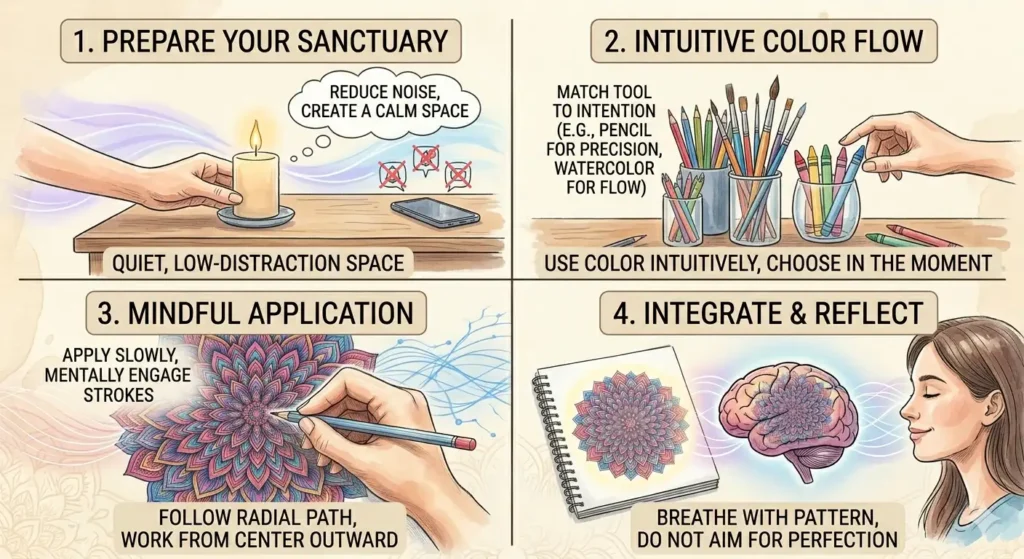
A few small habits can make your mandala coloring time even more effective for stress relief.
Pick a quiet, low-distraction space. Even five or ten minutes without notifications can deepen the calming effect.
Start from the center and work outward. This mirrors the traditional approach to mandalas and naturally encourages the steady, repetitive motion that supports a flow state.
Do not aim for perfection. The goal is not a flawless piece of art. The goal is the process itself. Letting go of the need for a “perfect” result is part of what makes the activity relaxing.
Use color intuitively. Instead of planning a color scheme in advance, let yourself choose colors in the moment based on how they feel. This keeps the activity present-focused rather than another task to plan out.
Breathe with the pattern. Some people find it helpful to take a slow breath with each new shape or section they color, turning the activity into a light breathing exercise as well.
A Simple Practice Worth Building
You do not need a special occasion or a stressful day to pick up a mandala. Many people find the most benefit from making it a small, regular habit, even just ten minutes a few times a week. Over time, this kind of consistent, low-pressure mindfulness practice can build the same resilience to daily stress that longer meditation sessions are known for.
Whether you are new to mindfulness coloring or have been doing it for years, the science is clear: there is a real, measurable reason mandalas feel so calming. The structure, the repetition, and the gentle focus they require make them one of the simplest and most accessible tools for everyday stress relief.
Ready to try it for yourself? Browse our full collection of adult coloring pages and find the pattern that matches how you want to feel today.