
Somewhere around the third week of summer break, every parent hits the same wall. School ended with so much promise, no schedules, no homework, just open days and good weather. And then by week three, you’ve heard “I’m bored” more times than you can count, the iPad has become a permanent fixture, and you’re Googling things like this article at eleven at night trying to figure out what to do with the next eight weeks.
Browse By Theme



I’ve been there enough summers in a row to have actually put together something that works, not a Pinterest board of activities that look great in photos but fall apart after ten minutes, but a real mix of things that fill time, tire kids out in a good way, and don’t require a second mortgage to pull off. This is everything I’d tell a friend who texted me asking, “okay but what do I actually do with my kids all summer.”
Start With a Loose Weekly Rhythm, Not a Strict Schedule
Before getting into specific activities, the single biggest thing that changed summer for our house wasn’t any one activity. It was giving each day of the week a loose theme. Not a rigid schedule with times attached, kids resist that almost as much as adults do, but a general shape to the week that everyone, including me, could predict.
Something like: Mondays are for water activities, Tuesdays are errand or library days, Wednesdays are wildcard “whatever we feel like” days, Thursdays are for anything messy or craft-based, and Fridays are for whatever big outing we’ve been planning. It sounds small, but kids actually find a lot of comfort in knowing roughly what kind of day it’s going to be, even during a season that’s supposed to feel unstructured.
Water Play, Because It’s the Backbone of Summer
If you have any access to water at all, a pool, a sprinkler, a kiddie pool in the backyard, or even just a hose and a hot afternoon, this is where a huge chunk of summer energy gets burned off, and it’s genuinely hard to overstate how much easier the rest of the day goes after an hour of water play.
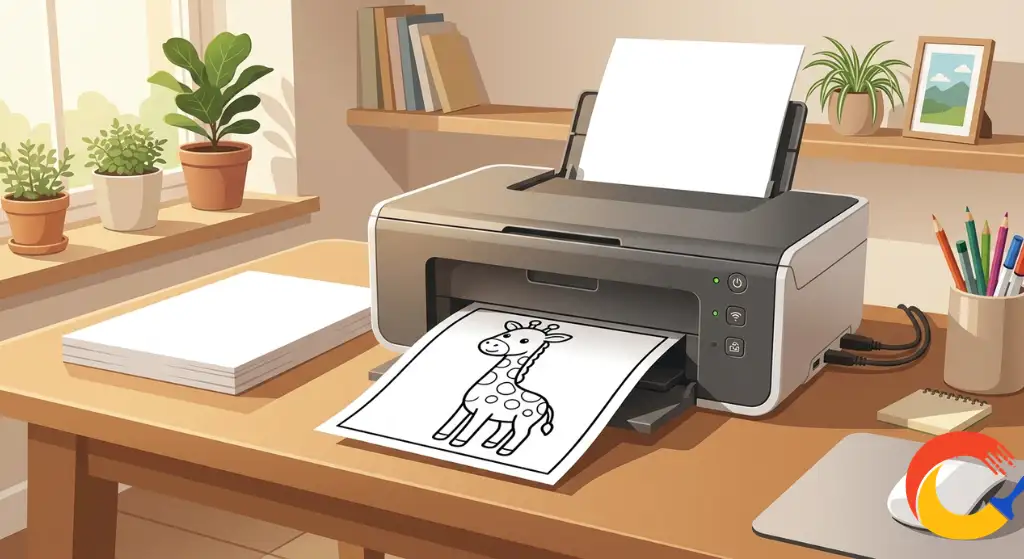
For days at an actual pool, I’ve found it helps to give the day a little extra shape beyond just “swim.” Bringing along a stack of swimming pool coloring pages for the drive there, or for the inevitable moment someone needs a break from the water, keeps the whole outing from feeling like just one long activity that kids eventually get restless with.
If a real beach trip is on the calendar, even once or twice a summer, that becomes its own full day of activities without much effort from you: sandcastles, shell collecting, wading, the works. We like to prep kids for it the day before with our beach coloring pages, partly to build excitement and partly because it gives younger kids a sense of what to expect, which seems to help with the overstimulation that a first beach trip of the season can sometimes bring on.
And if your kids are a little older and water-confident, summer is often when surfing lessons, boogie boarding, or just rougher wave play becomes the highlight of the week. Pairing that adventurous energy with surfing coloring pages the night before a beach day is a small thing, but it tends to get even reluctant kids excited about trying something a little outside their comfort zone in the water.
Backyard Camping (Lower Effort Than It Sounds)
This one surprises people because it sounds like a project, but it’s actually one of the lowest-effort, highest-payoff activities on this entire list. A tent in the backyard, or even just blankets draped over a clothesline if you don’t own a tent, flashlights, and letting kids “camp out” for one night turns an ordinary Tuesday into something they’ll talk about for weeks.
You don’t need a campfire or s’mores, though both help. The actual magic ingredient is permission to stay up slightly later than usual in an unusual setting. I’ve watched kids who complain about everything happily lie in a backyard tent at 9 p.m. just looking at the sky.
A Real Sprinkler or Water Balloon Olympics Day
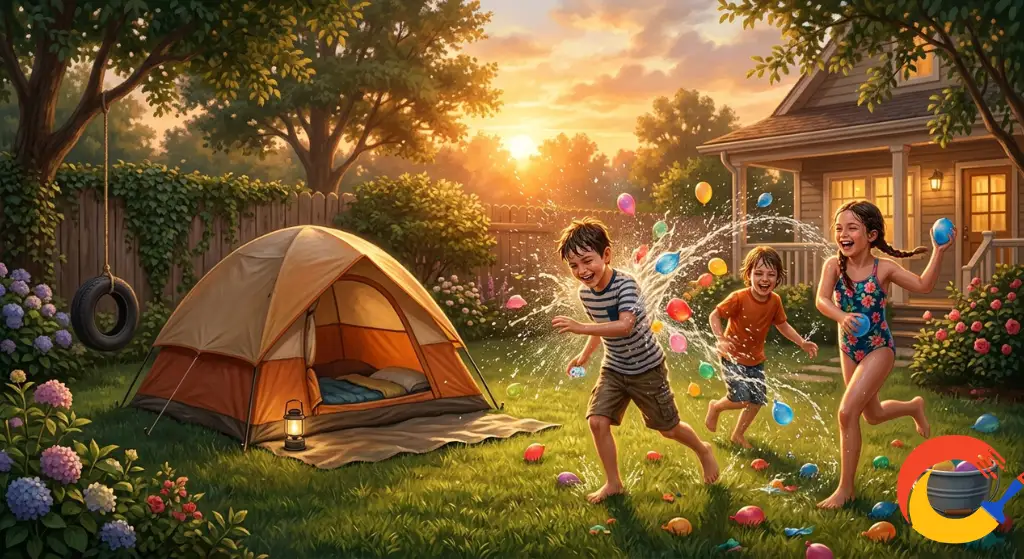
If you want one activity that reliably entertains a group of kids, whether it’s your own three or a whole neighborhood pack, set up a “water Olympics” in the backyard. A sprinkler run, a water balloon toss, a sponge relay where kids carry a soaked sponge across the yard without squeezing it out, and a “freeze tag but everyone’s wet” round at the end.
This works best with at least four or five kids, so it’s a great one for a planned playdate or a small neighborhood gathering rather than a solo afternoon. The setup takes maybe fifteen minutes and the kids will run themselves into exhaustion, which, depending on your goals for the evening, might be exactly what you’re after.
Library Reading Challenges (Underrated, Genuinely Free)
Most public libraries run a summer reading program, and if you haven’t signed your kids up, it’s worth doing in the first week of break rather than midway through. These programs usually have small prizes built in, stickers, free books, sometimes tickets to a local attraction, and that external motivation does more for reluctant readers than almost anything you can do at home.
Even without the formal program, a weekly library trip gives structure to an otherwise loose week. Kids pick their own books, which matters more than it sounds like it should, and you get air conditioning and an hour of quiet, which by week four of summer break, you will absolutely take.
Rainy or Too-Hot Day Backup Plan
Every summer has stretches of days that are either pouring rain or simply too brutally hot to be outside for long, and having a real plan for those days, rather than scrambling in the moment, saves a lot of frustration.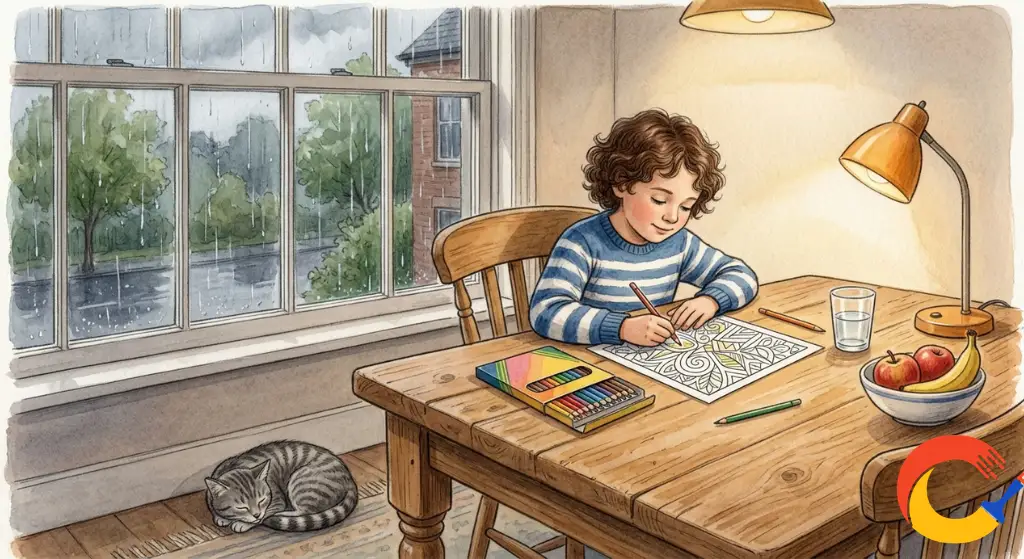
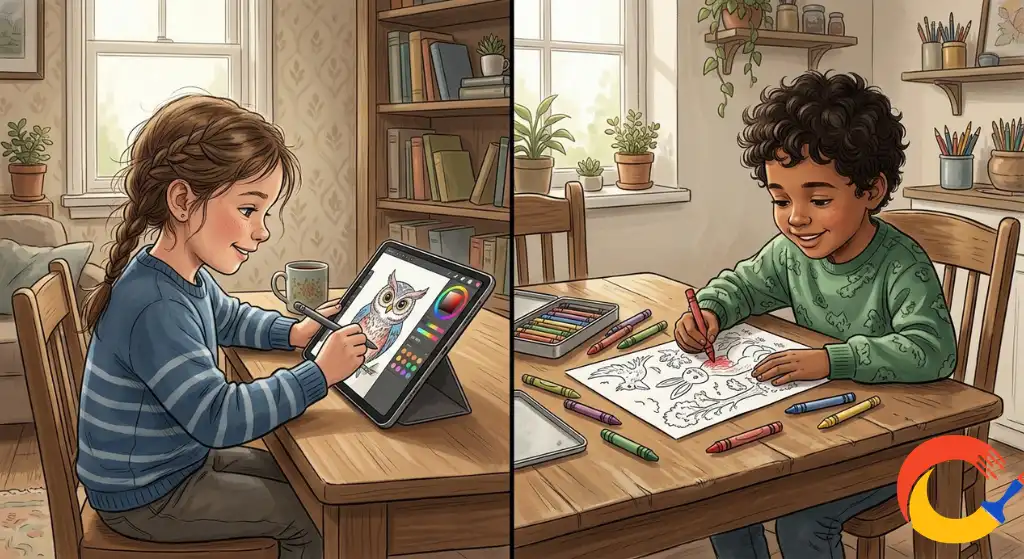
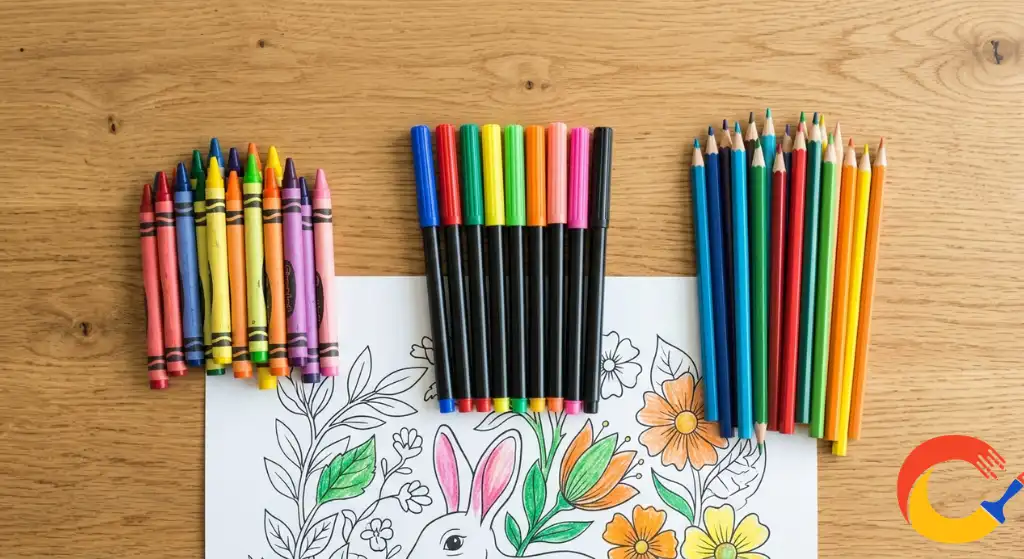
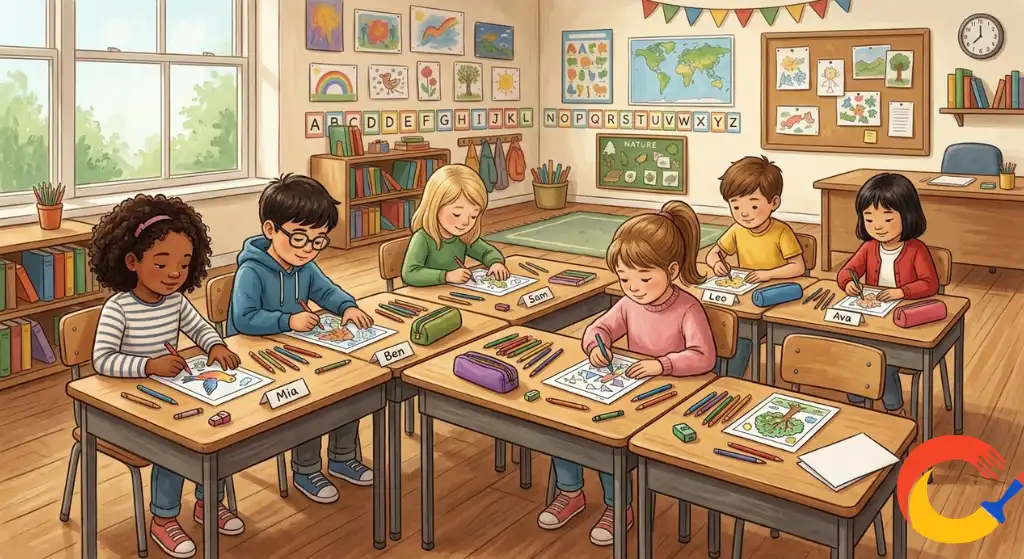
This is where a stack of varied summer coloring pages earns its place as an actual go-to, not a last resort. Setting up a coloring station at the kitchen table with a tall glass of water, some music on, and zero phone or tablet involved gives kids a genuine activity rather than just a way to pass dead time. For younger kids specifically, our summer coloring pages for preschoolers have simpler shapes that hold their attention longer without the frustration that more detailed pages can cause at that age.
If you want to stretch a coloring afternoon further, an ice cream-themed coloring session paired with actual ice cream afterward is an easy win. Our ice cream coloring pages and the more playful kawaii ice cream designs are an easy pairing for an afternoon that needs almost zero planning beyond “do you want sprinkles or not.”
A Simple Nature Scavenger Hunt
This costs nothing and takes five minutes to set up. Write or print a short list, a red leaf, something round, a bug, a stick shaped like a letter, and send kids into the backyard or a nearby park to find each item. It works for a wide age range, and younger siblings tend to tag along happily even if they don’t fully grasp the rules.
What makes this one worth repeating throughout summer rather than doing once is that the list changes with the season. Early summer hunts look different from late August ones, and kids notice that shift more than you’d expect.
Letting Boredom Exist for a Little While
This is less an “activity” and more a piece of advice I wish someone had given me earlier: not every hour of summer needs to be filled. Some of the best, most independent play I’ve watched my own kids invent has come directly out of a stretch of boredom that I didn’t immediately rush to fix.
It’s tempting to treat every quiet moment as a problem to solve, especially with so many activity ideas floating around, this article included. But a little unstructured, unscheduled time is doing something useful too, even when it doesn’t look like it from the kitchen window.
Putting Together Your Own Summer Plan
If you’re staring at eight or ten weeks of summer feeling overwhelmed, the easiest starting point is picking just three things from this list, one water activity, one rainy-day backup, and one low-effort “big” activity like the backyard camp-out, and building the rest of the summer loosely around those. You don’t need a fully planned calendar. You need a handful of reliable go-tos that you can reach for without having to think too hard in the moment, which is really what most of summer parenting comes down to anyway.
For the indoor and rainy-day side of things specifically, our full summer coloring pages collection and ocean-themed pages are worth bookmarking now, before you actually need them at 2 p.m. on a hundred-degree Tuesday. And if you want some research-backed reasoning on why quiet activities like coloring genuinely help kids regulate during a season that can feel overstimulating, the American Academy of Pediatrics has useful guidance on balancing screen time and unstructured play that’s worth a quick read before summer gets fully underway.