A mom in my neighborhood once told me she’d printed out a beautifully detailed mandala-style coloring page for her two-year-old, the kind with dozens of tiny sections, expecting a peaceful afternoon activity. Ten minutes later, her daughter had scribbled one giant black mark across the entire thing and walked away. The mom assumed her kid just “didn’t like coloring.” The actual problem had nothing to do with that. The page itself was wrong for her daughter’s age, not because toddlers can’t enjoy coloring, but because that particular design was built for hands and attention spans years ahead of where her daughter was developmentally.
Browse By Theme

This mismatch happens more often than people realize, and it’s almost always fixable with one simple shift: matching the coloring page to the child’s actual stage, not just their interests. A three-year-old and a nine-year-old can both technically “color,” but what makes the experience successful, and what keeps them coming back to it, looks completely different at each age.
Why Age-Matching Actually Changes the Experience
Before getting into specific age ranges, it helps to understand what’s actually changing in a child’s development that makes this matter so much. Two things shift dramatically between toddlerhood and the early elementary years: fine motor control and attention span. A toddler’s hand muscles and grip are still developing the basic strength and coordination needed for controlled movement, while their attention for any single task is naturally short, often just a few minutes. An eight or nine-year-old has had years to build both of those, which means they can handle, and often crave, far more complexity and a longer session.
Choosing a page that doesn’t account for this isn’t a small style preference. It’s often the difference between a kid who walks away frustrated after ninety seconds and one who stays engaged for twenty minutes and proudly shows off the result.
Toddlers, Roughly Ages 2 to 3
At this stage, the goal isn’t precision. It’s exposure and motor practice. Toddlers are still developing the basic grip needed to hold a crayon with any control, and their hand-eye coordination is nowhere near ready to stay neatly inside small lines. Expecting otherwise sets up the exact frustration that mom in my neighborhood ran into.
What actually works here: large, simple shapes with thick outlines and big open spaces. A single animal taking up most of the page, rather than a busy scene with lots of small elements, gives a toddler plenty of room to make big, uncontrolled strokes that still end up looking like “coloring” rather than chaos. Our school supplies coloring pages, things like a single oversized crayon or a simple glue bottle, work well here precisely because the shapes are bold and forgiving.
A practical note worth knowing: at this age, it’s genuinely fine, even expected, for a toddler to color outside the lines entirely or only color one small corner of the page before losing interest. That’s not a failed activity. That’s a two-year-old engaging with coloring exactly the way a two-year-old is supposed to.
Preschoolers, Roughly Ages 4 to 5
This is usually the age where things start clicking into place. Grip strength has improved, attention span has stretched a bit, and most preschoolers can recognize and start to respect a boundary line, even if they don’t stay perfectly inside it yet.
Pages with a moderate amount of detail work best here, simple enough not to overwhelm, but with a few distinct sections that give a child something to think about, like “should the wing be a different color than the body.” This is also the age where coloring starts naturally connecting to other learning, which makes a page tied to something they’re already excited about, like our first day of school coloring pages, genuinely useful rather than just decorative. A preschooler heading into their first year of school often responds well to a coloring page that mirrors something happening in their actual life right now.
This age range is also where you can start introducing slightly more involved scenes without overwhelming them, as long as the overall design stays clean and uncluttered.
Early Elementary, Roughly Ages 6 to 8
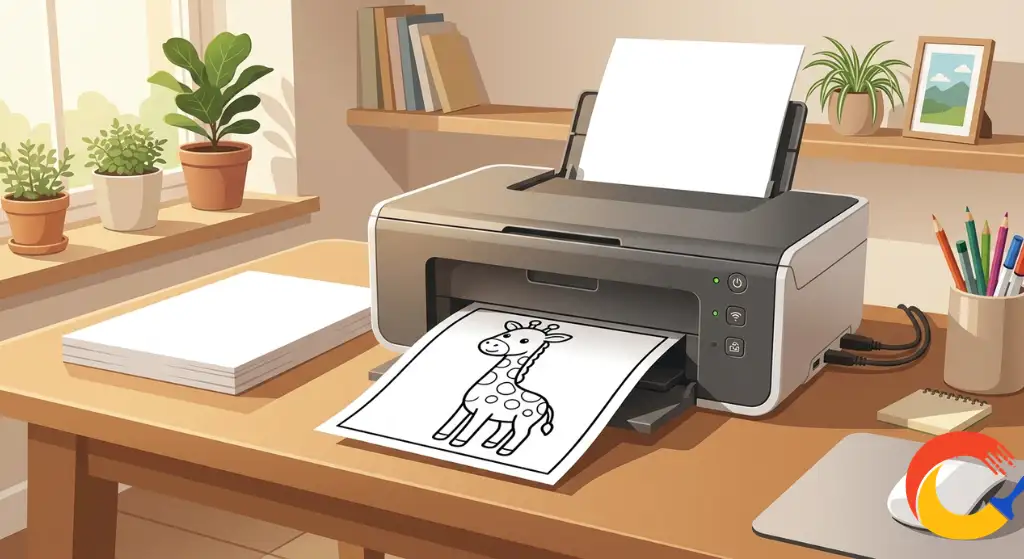
Somewhere in this window, a noticeable shift happens. Kids start caring about the result, not just the process. They want their giraffe to actually look like a giraffe when they’re done, and they start getting frustrated by their own perceived mistakes in a way that wasn’t really present a year or two earlier.
This is exactly the age to start introducing pages with genuine detail and multiple elements, like our welcome back to school coloring pages, which include enough variety, backpacks, school buses, classroom scenes, to hold a six or seven-year-old’s attention through a full sitting rather than a two-minute glance. Kids at this age also start enjoying pages with a small story or scene happening, rather than a single isolated object, because their imagination is ready to engage with a bit of narrative.
One thing worth watching for at this age: if a child seems to be getting genuinely upset over small “mistakes” while coloring, like coloring slightly outside a line, that’s often less about the coloring page and more about a broader perfectionism pattern worth gently addressing, regardless of what activity it’s showing up in.
Older Elementary, Roughly Ages 9 to 12
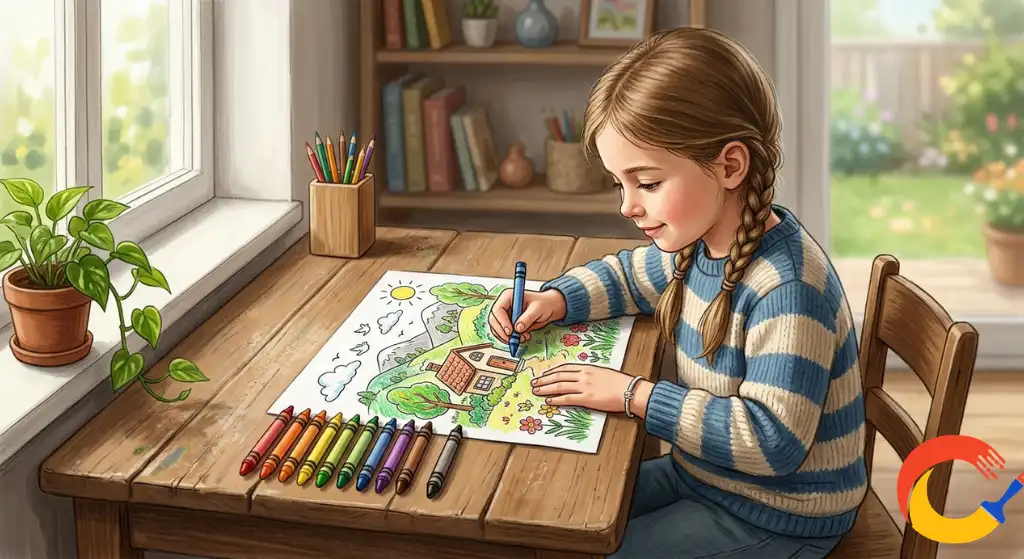
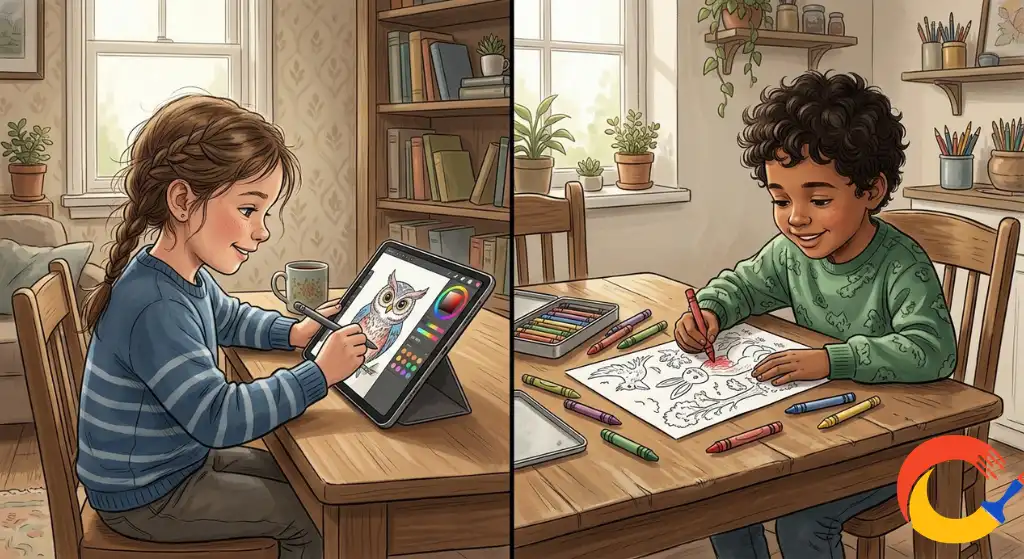
By this age, fine motor control is largely there, and what kids actually want is complexity and a sense of accomplishment from something that takes real effort. A page that would have overwhelmed them at six can now become a satisfying twenty or thirty-minute project, especially with finer tools like colored pencils or gel pens, which this age group tends to gravitate toward over basic crayons.
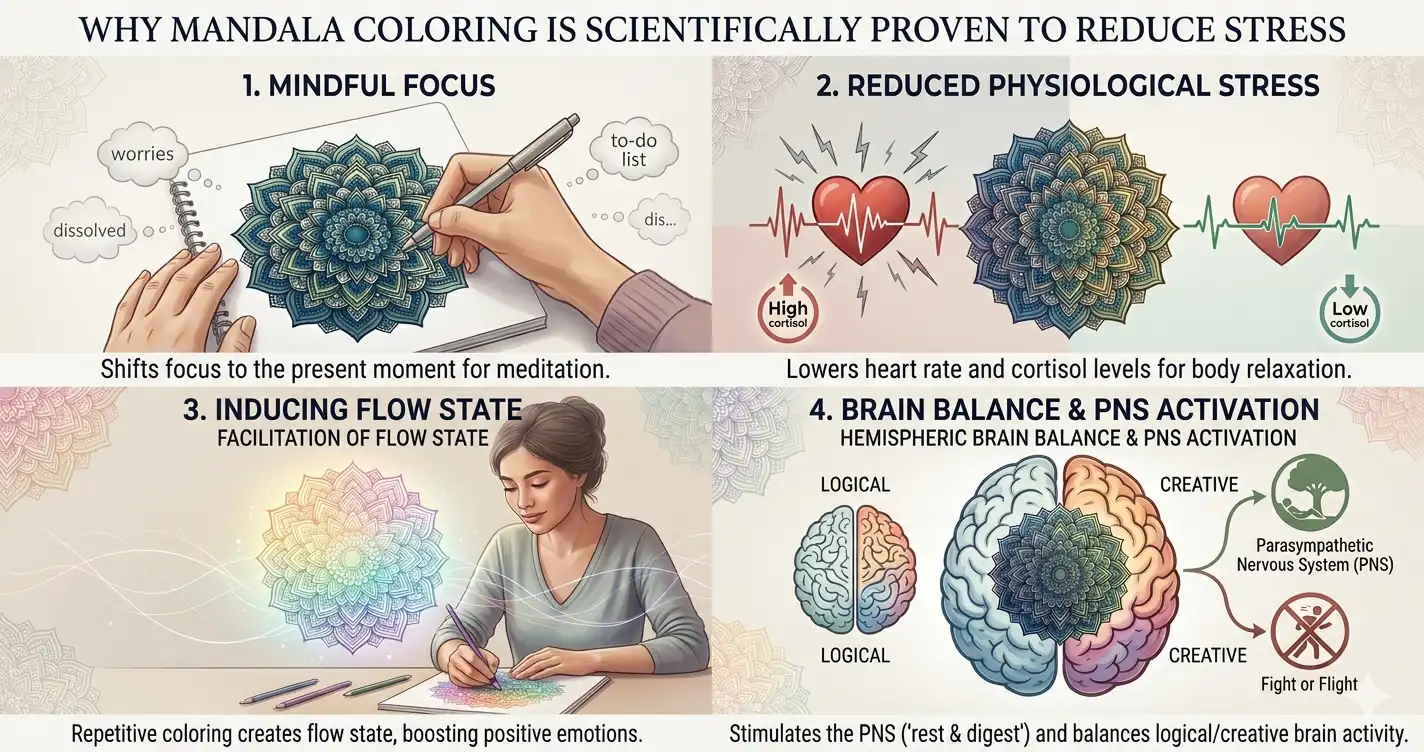
This is also the age where coloring starts to double as a genuine decompression activity rather than just play, similar to how adults use mandala coloring for stress relief. Kids in this range, especially those dealing with school pressure or a lot of extracurricular scheduling, often respond well to having a few detailed, absorbing pages on hand specifically for winding down, not unlike what’s described in our piece on why mandala coloring reduces stress, which applies just as much to a stressed-out preteen as it does to an adult.
What Happens When the Match Is Off
It’s worth naming the two most common mismatches directly, because they’re both avoidable once you know what to look for.
Giving a page that’s too advanced for the child’s age usually looks like quick frustration, abandoning the page early, or scribbling instead of actually coloring, the exact scenario from the start of this article. The fix isn’t to push through it or assume the kid “isn’t into coloring.” It’s almost always to step down in complexity and try again with something simpler.
Giving a page that’s too simple for an older child tends to look different: boredom, finishing in under a minute, or flatly saying “this is for babies.” Older kids genuinely disengage from coloring altogether if everything offered to them feels beneath their actual skill level, which is part of why so many people assume coloring is “just a little kid thing.” It’s not. It’s an age-matching problem.
A Quick Way to Check If You’ve Got the Right Page
If you’re standing in front of a stack of pages trying to decide what’s appropriate, a simple gut-check works better than overthinking it. Look at how many distinct sections or elements are on the page. Toddlers do best with one to three large shapes. Preschoolers can handle four to eight moderate sections. Early elementary kids are usually ready for a full scene with multiple elements working together. Older elementary kids often want genuine detail and intricate patterns that take real time to finish.
This isn’t a strict rule, plenty of kids surprise you in both directions, but it’s a far more reliable starting point than guessing based on a character or theme a child says they like, since interest and developmental readiness are two completely separate things.
Building a Mixed Stash Rather Than One-Size-Fits-All
If you have kids spanning a few different ages, or you’re stocking pages for a classroom with a range of developmental levels, the most practical approach is keeping a varied mix on hand rather than assuming one collection works for everyone. The American Academy of Pediatrics has helpful general guidance on developmental milestones by age if you want a broader reference point beyond just coloring specifically, which can help calibrate expectations across other activities too, not just this one.
Our full kids coloring collection spans a wide enough range of complexity that it’s worth browsing with a specific child’s current stage in mind rather than just picking based on subject matter alone. Matching the page to the kid, not just the kid to whatever’s on top of the pile, is really the entire trick here, and once you start doing it deliberately, it’s surprising how much smoother coloring time becomes for everyone involved.