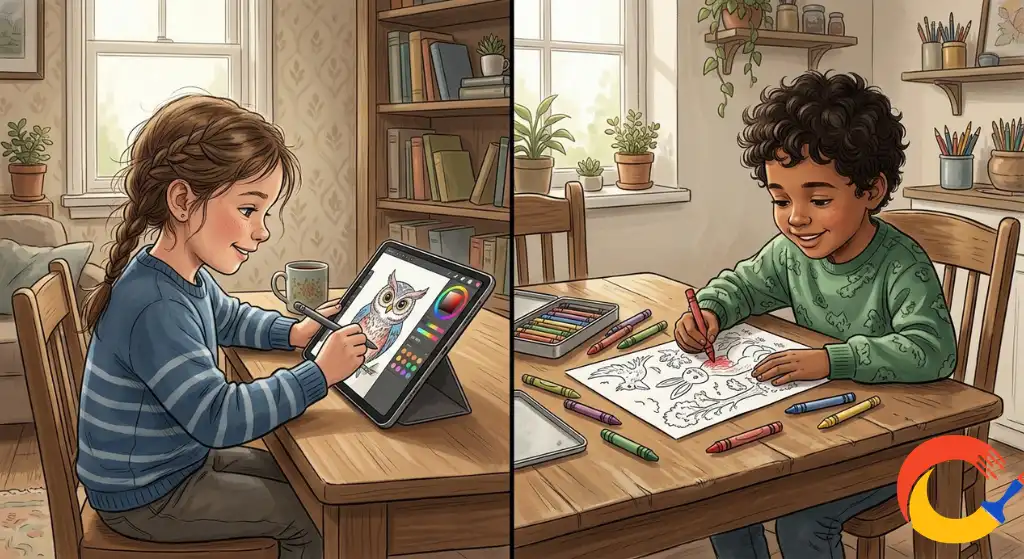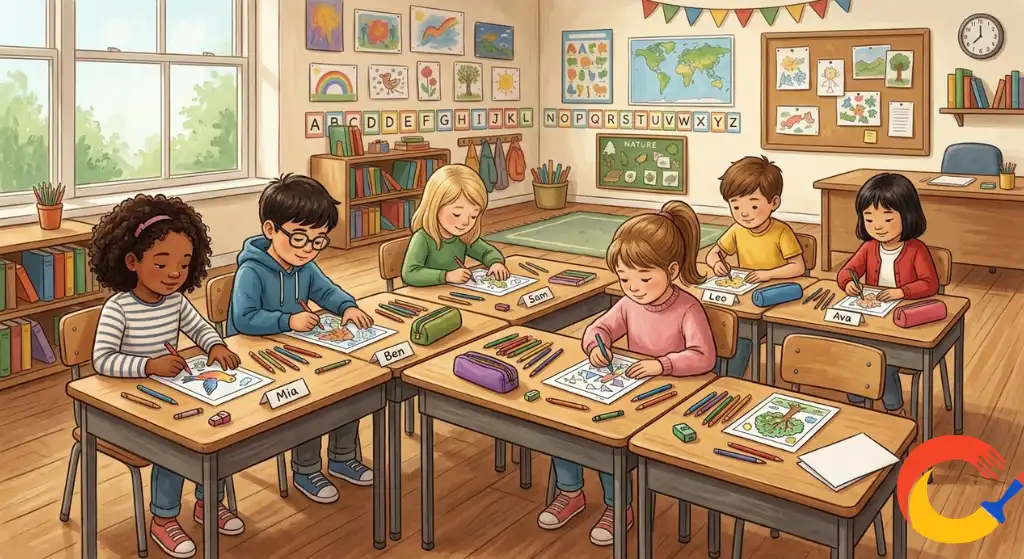
Every few weeks, somebody asks a version of the same question: which coloring tool should I actually buy? Usually it comes up right before a birthday, a long car trip, or the start of a school year, when someone’s standing in the school supply aisle staring at a wall of options and realizing they have no idea if the $4 crayons or the $15 markers are actually the better choice.
Browse By Theme

The honest answer is that none of these three tools is universally “better.” Each one does something the others can’t, and the right choice depends almost entirely on who’s coloring, what they’re coloring, and what kind of result you’re hoping for. After years of going through stacks of pages with different tools, here’s what actually holds up.
Crayons: The Underrated Workhorse
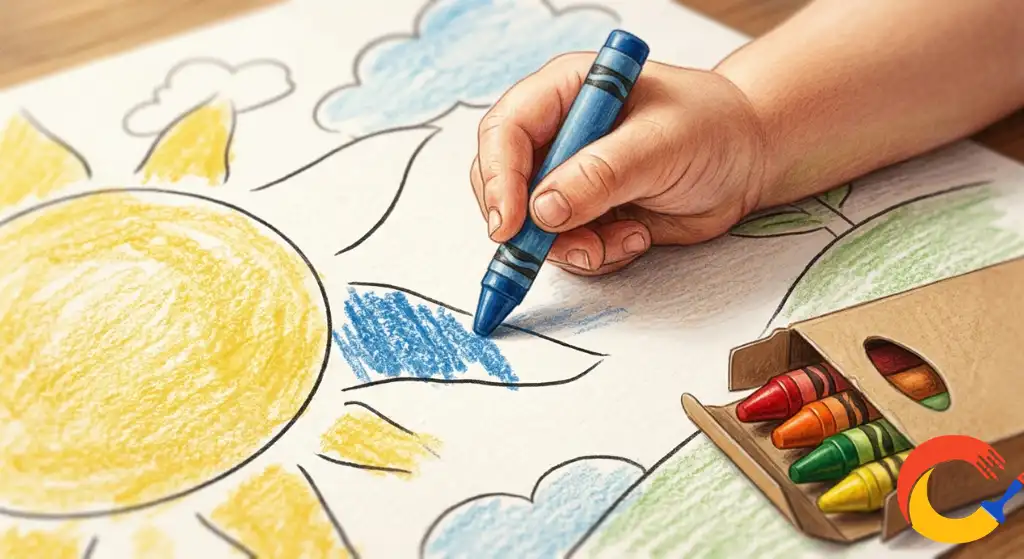
Crayons get treated like the entry-level option, the thing you graduate out of once you’re “serious” about coloring. That reputation isn’t really fair. Crayons do a few things better than either marker or pencil, and dismissing them outright means missing out on a tool that’s genuinely the right call in plenty of situations.
The biggest advantage is forgiveness. Crayon wax goes down soft and blendable, which means small mistakes, going slightly outside a line, applying uneven pressure, layering two colors that don’t quite match, all tend to look fine rather than glaringly wrong. This makes crayons the right default for young kids who are still building motor control, since the medium itself absorbs a lot of the imprecision that comes with developing hands.
Crayons also genuinely shine on simpler, bolder designs. A page with large, open spaces and thick outlines, like our first day of school coloring pages, is exactly where crayons feel right rather than limiting. There’s enough room to work with broad strokes, and the soft, slightly textured look crayon leaves behind actually suits a simple design better than a flat, perfectly even marker fill would.
Where crayons fall short is detail. Anything with small sections, fine lines, or intricate patterns becomes a real struggle, since crayon tips wear down and lose precision fast, and pressing hard enough to get solid coverage in a tiny space often tears thinner paper.
Markers: Bold, Fast, and a Little Unforgiving
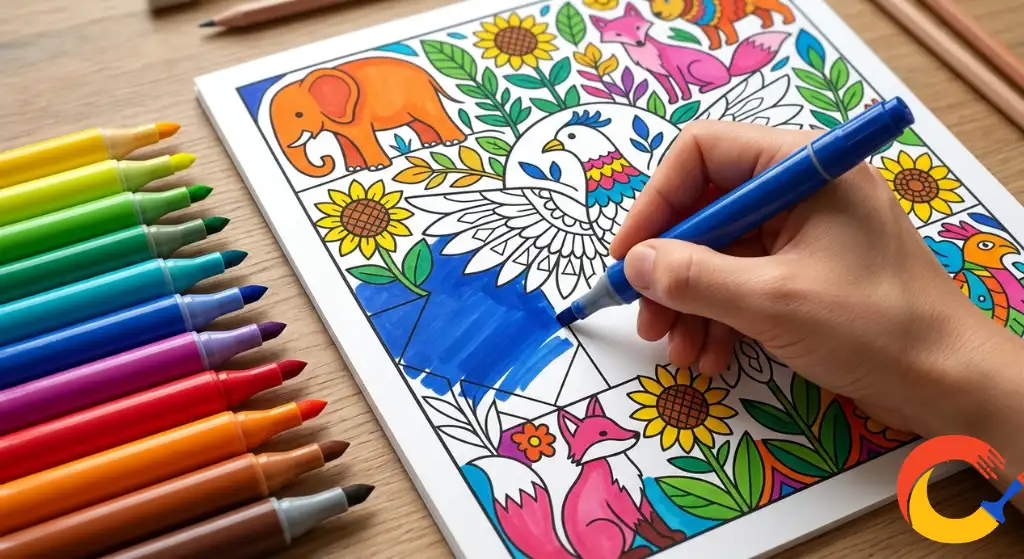
Markers are the tool most kids gravitate toward once they’ve outgrown crayons, mostly because the payoff is immediate. One or two strokes and you’ve got solid, vibrant color, no layering or pressing required. For a kid who gets frustrated waiting for a result, that instant gratification matters more than people give it credit for.
The catch is that markers don’t forgive mistakes the way crayons do. Once marker ink hits the page, it’s there, no going back to lighten it or blend it away. They also bleed through thinner paper almost without exception, which is the single most common complaint people have after switching from crayons to markers and getting frustrated by the mess on the table underneath.
This is really a paper problem more than a marker problem, and it has a straightforward fix: cardstock or any heavier paper handles markers without bleeding through, while standard printer paper just isn’t built for the amount of liquid ink markers put down. If markers are the go-to tool in your house, it’s worth printing on something heavier than default paper specifically for that reason.
Markers genuinely excel on pages with large, defined color-block areas, designs where you want big, even saturated color rather than texture or shading. Our kawaii coloring sheets are a good example of this, since the bold, simple shapes are built for the kind of flat, vibrant color markers naturally produce, and the style actually benefits from that clean, graphic look rather than needing the texture crayon or pencil would add.
Colored Pencils: Slower, but Worth It for Detail
Colored pencils are the tool most likely to get dismissed by kids as “boring” at first, mostly because they require more effort than markers for less immediate payoff. That impatience is understandable, but it’s also exactly why colored pencils are the right tool once a page gets genuinely detailed.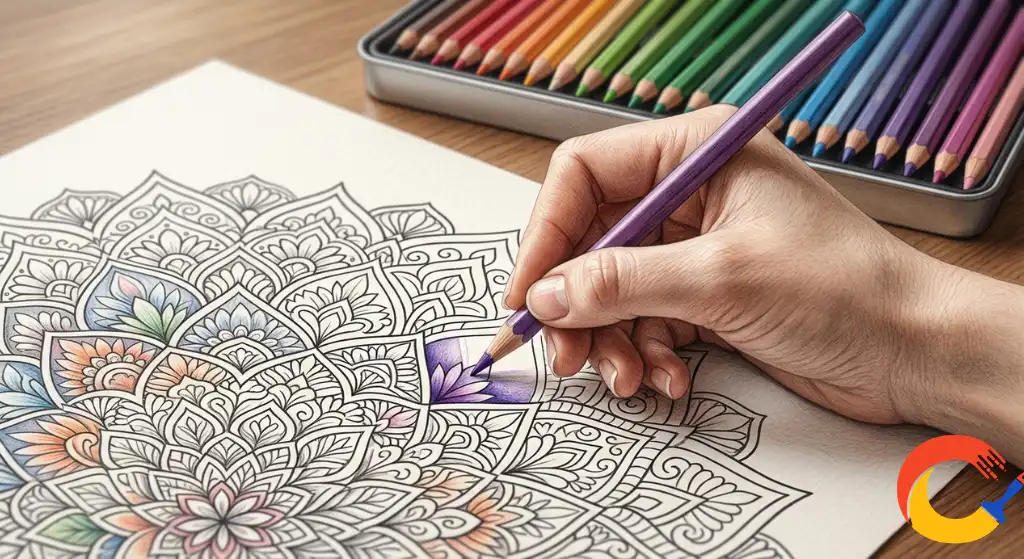
The real advantage of colored pencils is control. You can shade lightly or press hard for more saturation, blend two colors directly on the page, and work in small, precise spaces without bleeding or tearing the paper the way markers or heavy crayon pressure sometimes will. This makes colored pencils the clear choice for anything intricate, fine patterns, detailed scenes, or designs with lots of small, separate sections that need to be distinguishable from each other.
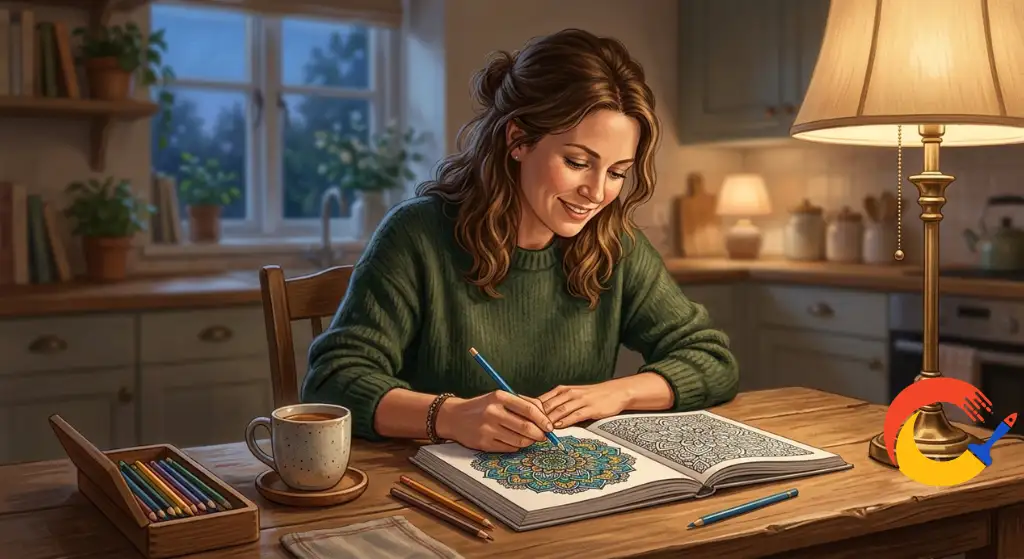
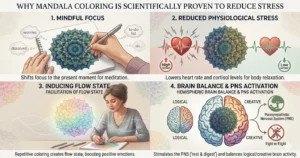
This is exactly the territory where our intricate mandala designs live. A page with dozens of small repeating sections genuinely needs the precision colored pencils offer, since crayon tips are too blunt and markers would bleed one section into the next with no way to keep colors cleanly separated. The same goes for our animal mandala pages, where the fine linework rewards a slower, more controlled approach.
Colored pencils do ask more of the person using them, both in patience and in fine motor control, which is part of why they tend to click better with older kids and adults than with toddlers or preschoolers who haven’t built that control yet.
Matching the Tool to the Actual Page, Not Just the Age
A lot of advice on this topic stops at “crayons for little kids, pencils for older kids,” and while age is a real factor, the design of the page itself matters just as much, sometimes more.
A simple, bold page handed to an eight-year-old still does best with crayon or marker, since the design doesn’t have anything fine enough to benefit from a colored pencil’s precision. Meanwhile, a genuinely intricate design, something like our flower mandala pages, is going to frustrate a colorer of any age if they try to tackle it with a thick crayon that can’t get into the small spaces.
A reasonable rule of thumb: look at how small the individual sections of a page are before picking a tool. Large, open sections favor crayons or markers. Small, detailed sections favor colored pencils, almost regardless of who’s holding them.
Mixing Tools on a Single Page
This doesn’t come up often in advice articles, but it’s worth mentioning because it works better than people expect. There’s no rule saying a page has to be colored entirely with one tool. Using markers for large background areas and switching to colored pencils for small detailed elements within the same page gets you the speed of markers where it’s useful and the precision of pencils where it’s needed, without forcing one tool to do a job it’s not suited for.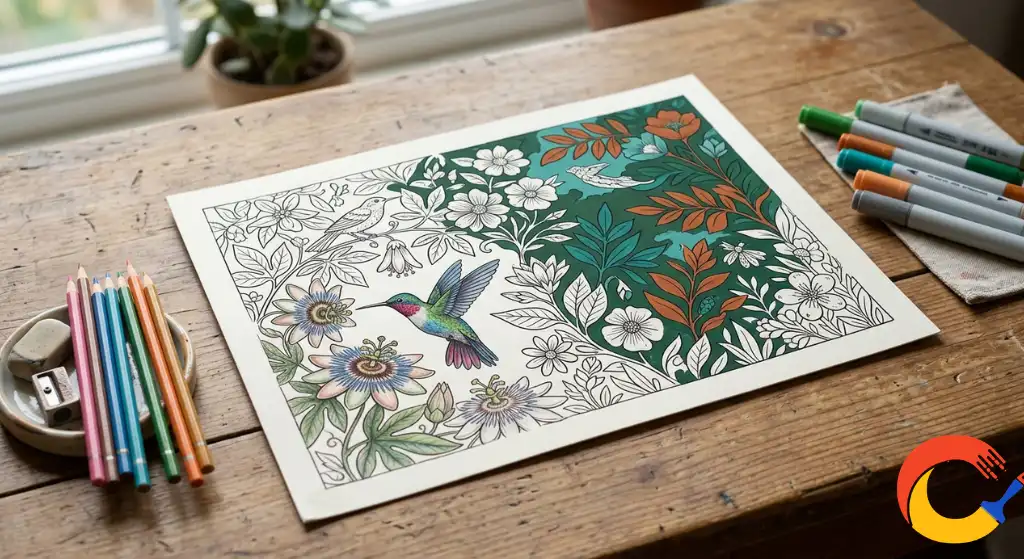
This approach tends to come up naturally with older kids and adults working on more complex pages, where the patience for an entirely pencil-colored piece exists for the detailed sections, but nobody wants to spend twenty extra minutes painstakingly filling in a large open background with a pencil tip.
A Note on Cost and Longevity
Since this question often comes up around back-to-school shopping or holiday gift planning, it’s worth a quick word on value. Crayons are by far the cheapest option and the most resistant to damage from rough handling, which matters if you’re buying for a younger child who treats every art supply as disposable. Markers tend to dry out the fastest if caps aren’t replaced properly, which is a real cost consideration if a child colors frequently. Colored pencils last the longest by far, since they have no ink to dry out, and a decent set can genuinely last years with normal use, making them a reasonable investment despite the higher upfront cost.
If you want a deeper look at how different art mediums behave on paper more generally, Crayola’s own materials guide covers some of the technical differences between wax, ink, and pigment-based tools in more detail than fits here, if you’re curious about the chemistry behind why each one behaves the way it does.
The Short Version
If you only remember one thing from all of this: match the tool to the detail level of the page, not just to the age of the person coloring it. Bold and simple pages want crayons or markers. Fine and intricate pages want colored pencils. And there’s nothing wrong with keeping all three on hand and letting the specific page decide which one comes out of the box.
Looking for pages to try this out on? Our back to school coloring pages work well for testing crayons and markers side by side, while our full mandala collection is the best place to put colored pencils through their paces on something genuinely detailed.